
Lancaster City Directory Collections Located
Lancaster city directories survive through several documented leads, but the available web research does not prove one complete shelf, one continuous run, or a single publisher. That distinction matters. The Fairfield County District Library, Fairfield County Chapter of the Ohio Genealogical Society, and Fairfield Heritage Association are the practical local channels for a title-and-year question. The oldest identified lead is an 1859 Lancaster directory in Allen County Public Library and FamilySearch catalogue leads. A separate collection lead identifies a 1906 to 1934 sequence, while a county study confirms several later editions were actually consulted. Ask the holding institution to verify the exact volume before making a trip or citing an entry.
| Collections | Years | Where Held | Access |
|---|---|---|---|
| Lancaster, Ohio city-directory catalogue lead | 1859 | Allen County Public Library and FamilySearch catalogue leads | Confirm the title, call number, publisher, and format before use |
| Lancaster city-directory sequence lead | 1906 to 1934 | Allen County Public Library collection lead | Check individual editions and whether any street section survives |
| Documented editions consulted in county research | 1938, 1947, 1949, 1952, 1957, 1959, 1960, 1964 to 2013 selected years | County-hosted historic-property research | Evidence of consulted editions, not a shelf list or continuous run |
| Lancaster Ohio City Directory | 1990 | Ohio Genealogical Society accession record | Verified R. L. Polk & Co. title point; inspect the actual volume for its contents |
These are coverage leads, not a promise that every intervening year exists or is open online. FCDL's genealogy page describes a browsable local-history collection, but does not publish an exhaustive Lancaster city-directory inventory. FCC-OGS and Heritage add specialized local material and can help identify the right follow-up repository when a title is missing from a public catalogue.
Lancaster City Directories, 1859 to 1960
The documented run has useful fixed points and equally useful gaps. An 1859 Lancaster lead should be treated as a specific catalogue question, not as evidence of every nineteenth-century year. The 1906 to 1934 sequence likewise needs volume-by-volume checking. The later list is concrete: a Fairfield County-hosted environmental assessment reports consulting directories for 1938, 1947, 1949, 1952, 1957, 1959, 1960, 1964, 1968, 1972, 1977, 1982, 1987, 1992, 1995, 1999, 2003, 2008, and 2013. That supports a date map for an address trail, while leaving publication continuity unknown.
The 1990 Ohio Genealogical Society accession document identifies Lancaster Ohio City Directory and R. L. Polk & Co. It establishes that one title-year-publisher combination only. Do not project Polk to all Lancaster directories, and do not assume a reverse or criss-cross section without viewing the edition. A title page, table of contents, and abbreviation key are the first three pages worth recording.
Note: A directory's printing year can lag the information-gathering period, so compare the prior and following available editions before dating a move.
FCDL's Lancaster Directory Research Desk
Fairfield County District Library's genealogy collection is on the first floor of the Main Library at 219 N. Broad Street in Lancaster. Its published holdings include census, marriage, cemetery, immigration, military and partition records, family histories, atlases, and maps. Those materials can test an address or surname found in a city directory, even where an exact directory year must be obtained elsewhere. For a shelf request, supply the proposed title, year, surname, and whether an alphabetical or street section is needed.
The manifest captured the FCDL research-tools page as part of the Lancaster city-directory research route.
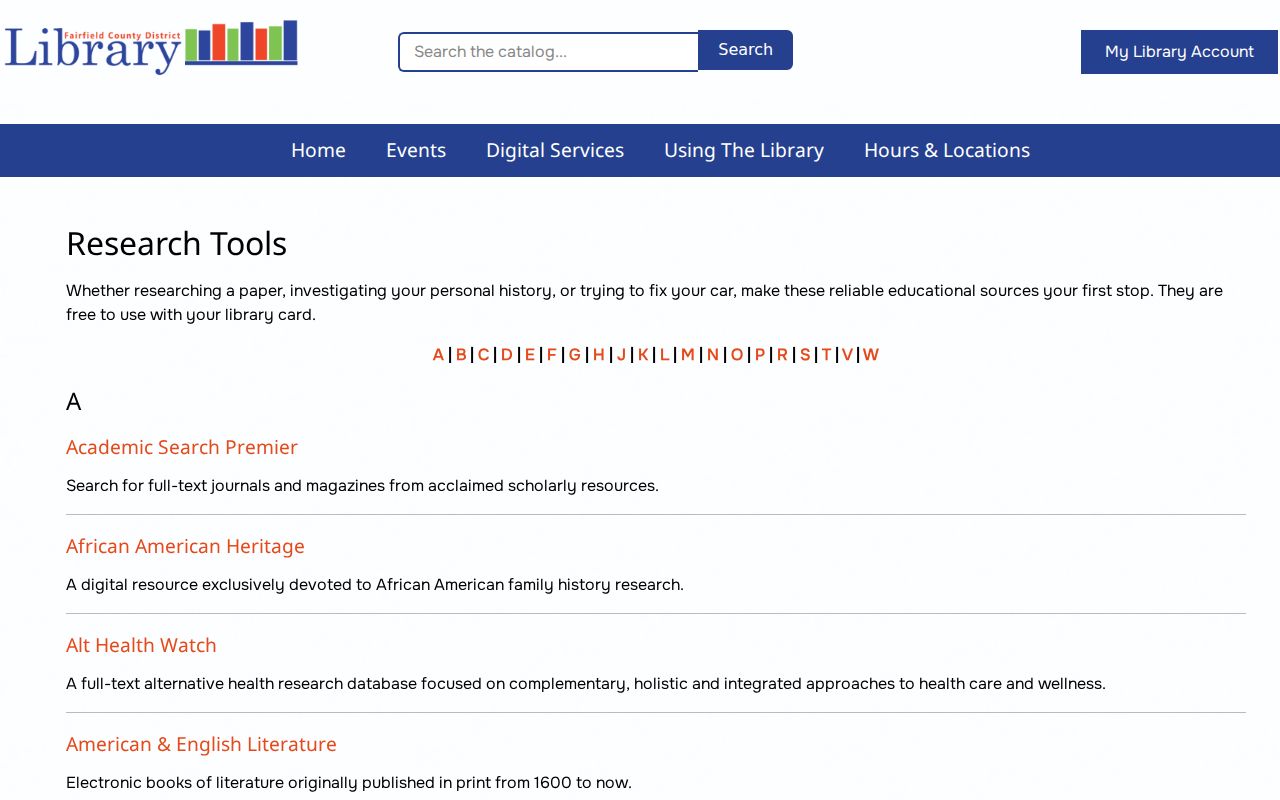
Library research tools are a bridge to maps, newspapers, and local-reference material, rather than proof that a particular directory volume is digitized or held at a named shelf.
FCDL also accepts limited genealogy and obituary requests through its Ask a Librarian service. It accepts up to three specific tasks, asks for a death date on an obituary request, and says a reply can take up to two weeks. A narrow request such as a title/year check or a dated obituary question is more useful than asking staff to search every record for a surname.
Reading a Lancaster City Directory Carefully
No unambiguous digitized Lancaster entry page, title page, and key were verified in the research. That prevents a safe claim that every Lancaster city directory uses the same symbols or lists the same fields. When an actual edition is open, document the page and read what it says rather than importing abbreviations from another city. A directory can place a person, family, or business at a reported address and may include work or relationship context, but it remains a dated commercial compilation rather than a certified residence record.
| Name form | Copy spelling, initials, and any relationship notation exactly as printed. |
|---|---|
| Address | Record home and business addresses separately, plus the page and column. |
| Occupation or business | Preserve it as printed, without treating it as current proof or a personal profile. |
| Spouse, widow, owner, or occupant mark | Use only if the inspected volume actually prints the notation and key. |
| Section type | Note whether the volume is alphabetical, classified, street-order, or a combination. |
- Criss-cross directory
- A separately verified reverse section arranged by street and number rather than by surname.
- Householder index
- An index organized around a household or address, whose scope must be checked in the actual volume.
- Abbreviation key
- The printed explanation for the edition's shortened terms and marks, usually worth photographing before interpreting entries.
Lancaster Directory Years and Census
Match a directory year to the closest available federal census instead of filling a decade with assumptions. The National Archives census resource identifies public federal population schedules from 1790 through 1950, with the 72-year access rule making 1950 the newest public individual schedule. A census can supply a dated household snapshot, but address use and the questions asked vary by year. When a name index is not enough, the directory address can help locate the correct ward or enumeration district.
The manifest's federal census source provides the Lancaster city-directory page's census access reference.
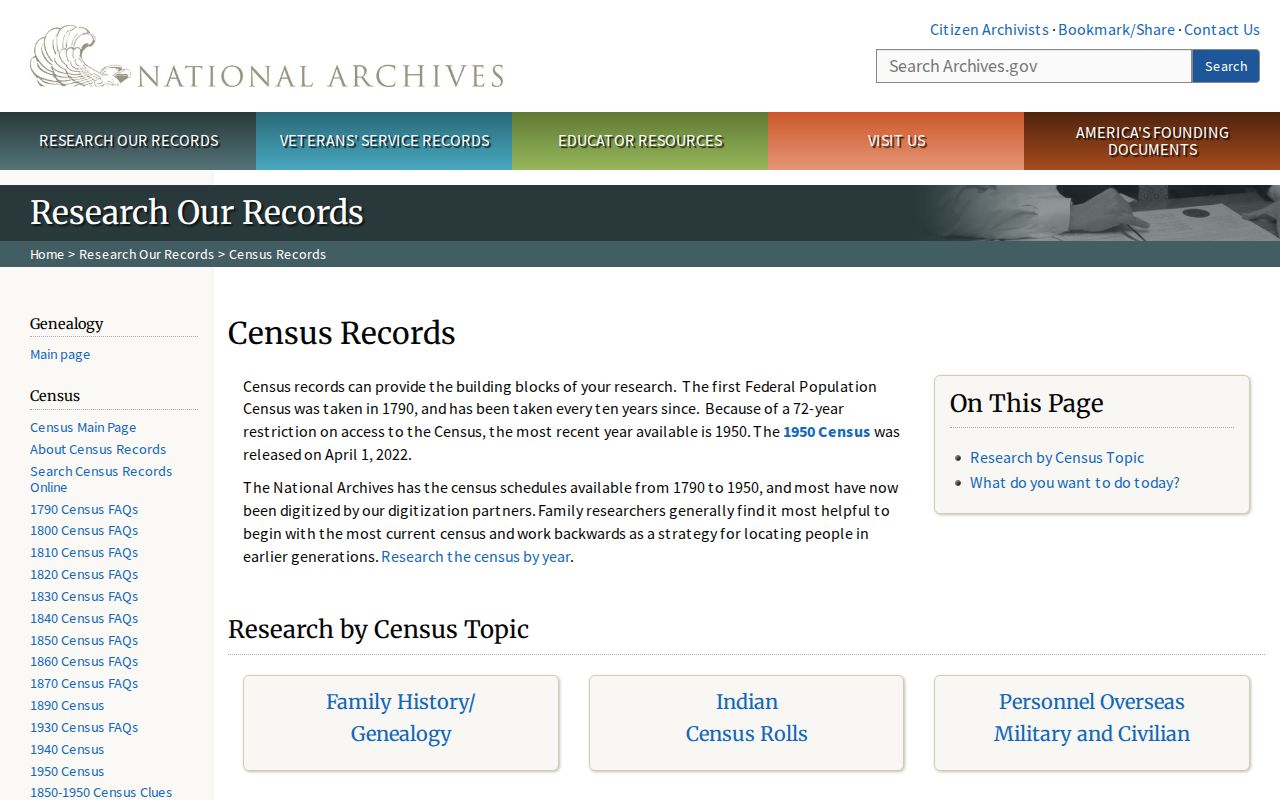
Use the census as an independent dated layer. It can support a household connection, but it does not turn a directory listing into an unbroken address history.
- Start with a dated name or address and copy the directory entry with its page reference.
- Check the previous and next available Lancaster city directories, recording changes in spelling, address, and business wording.
- Use a confirmed street-order section only after verifying that the edition includes one.
- Pair the directory date with the nearest public census and identify the relevant household or enumeration district.
- Test a final appearance against an obituary, cemetery, Probate, deed, or newspaper source.
Lancaster City Directory Addresses, 1910
A city directory address becomes a physical place when paired with the Library of Congress December 1910 Lancaster Sanborn map. The public-domain set contains 31 sheets. It can show street layout, block context, building footprint, and use at that map date. It does not name the people who lived or worked there. Pair a map sheet with a directory year, a census, or a deed rather than turning a building symbol into a resident claim.
Historic street wording needs the same care. City historical material identifies Front Street as today's Memorial Drive, and earlier records can also use New Lancaster before the name was shortened in 1805. Record the wording actually printed in each source. A modern address search should not silently replace an old street form without a documented continuity clue.
Note: The 1910 map dates a building and block context, not an occupant, ownership change, construction year, or complete property history.
Lancaster Directory Research Insider Tip
The Fairfield County Chapter OGS library is at 503 Lenwood Drive in Lancaster. Its published holdings include WPA grave-registration cards and cemetery maps, obituaries, yearbooks, atlases, family histories, pre-1930 Common Pleas material, and Fairfield County death certificates beginning in 1908. Those sources can confirm or question a city-directory lead after the correct name, date, and place are known. The library lists three patron computers with Ancestry Library Edition, Fold3, and Newspapers.com, and reports 25-cent copies.
The manifest captured the FCC-OGS library page for this Lancaster city-directory route.
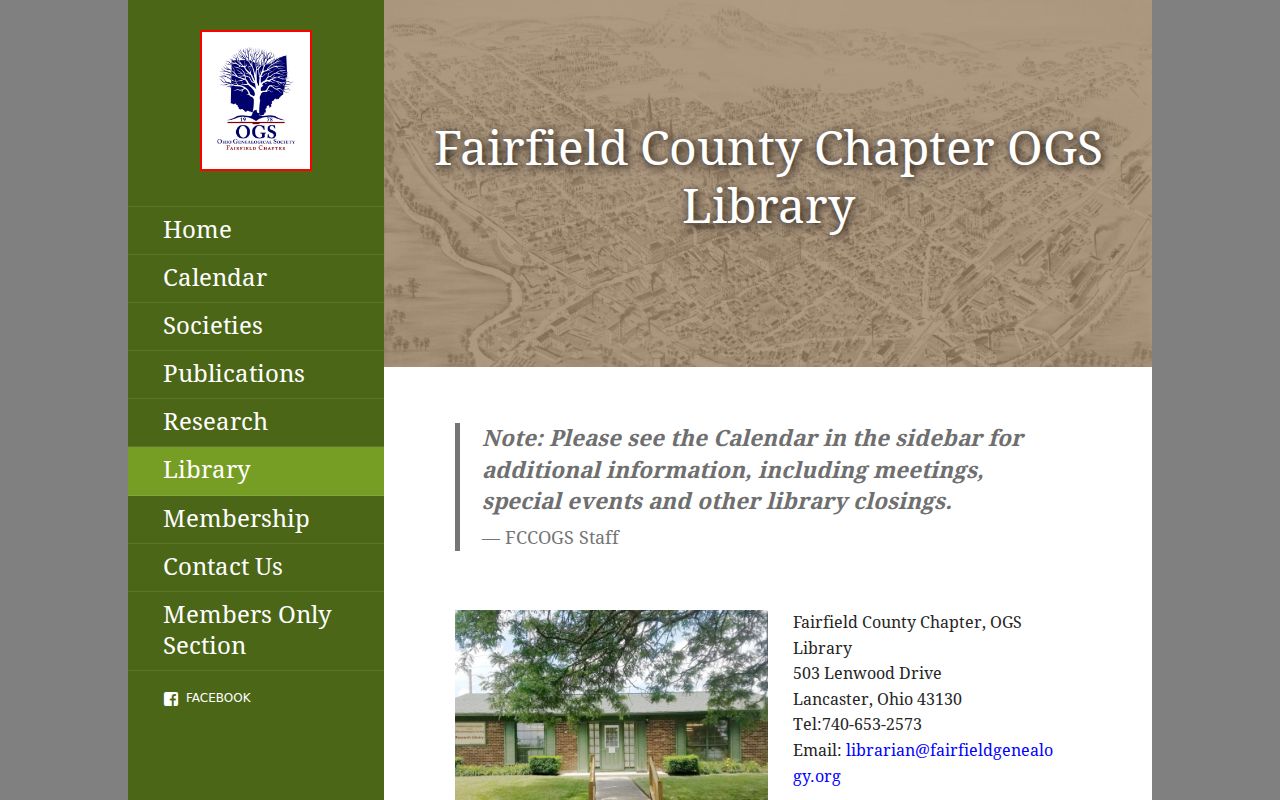
FCC-OGS is most effective with a bounded request: a name variant, a dated directory reference, an address or township, and the particular source needed next. Its schedule lists Monday through Wednesday and Friday, 10 to 4, with other times by appointment.
Lancaster City Directories, New Lancaster
Older searches benefit from one local place-name check. Lancaster was known as New Lancaster before the legislature shortened the name in 1805. A catalogue, family paper, or early record may use that earlier heading or a broader Fairfield County description. The City history supplies that context, but the name change does not establish that two same-surname entries are the same person. Compare dates, address wording, and at least one independent record.
For place-centered material, the Fairfield Heritage Association Archive Room holds maps, drawings, newspapers, photographs, oral histories, church and business history, local-family material, and historic-house context. Its research access is scheduled through the organization and is a useful fallback when a directory gives only an address or business clue.
Lancaster Directories and Obituary Dates
A disappearance from a Lancaster city directory has several possible explanations: a move, a changed spelling, a different household arrangement, a business change, or a death. It is not enough to select the most convenient story. FCC-OGS reports an obituary index reaching from the nineteenth century through December 2021, while FCDL can handle narrow obituary requests when a death date is supplied. Historic Probate supplies a separate online route for approximately 1803 to 1995 records and can provide an estate or will lead when the relevant person was involved.
Keep the directory collection work separate from the modern address chain. A Lancaster past residents search uses deeds, legal descriptions, directories, and census records in a backward address trail. A directory can supply the occupant layer within that trail, but it does not identify recorded ownership on its own.